Our partners
New York Cancer & Blood Specialists OneOncology Astera Cancer Care CHC Sunstate Oncology Tennessee Oncology UCBC MBPC
AI POWERED

AI Workflows for Oncology

Get Started
arrow up rightarrow up right
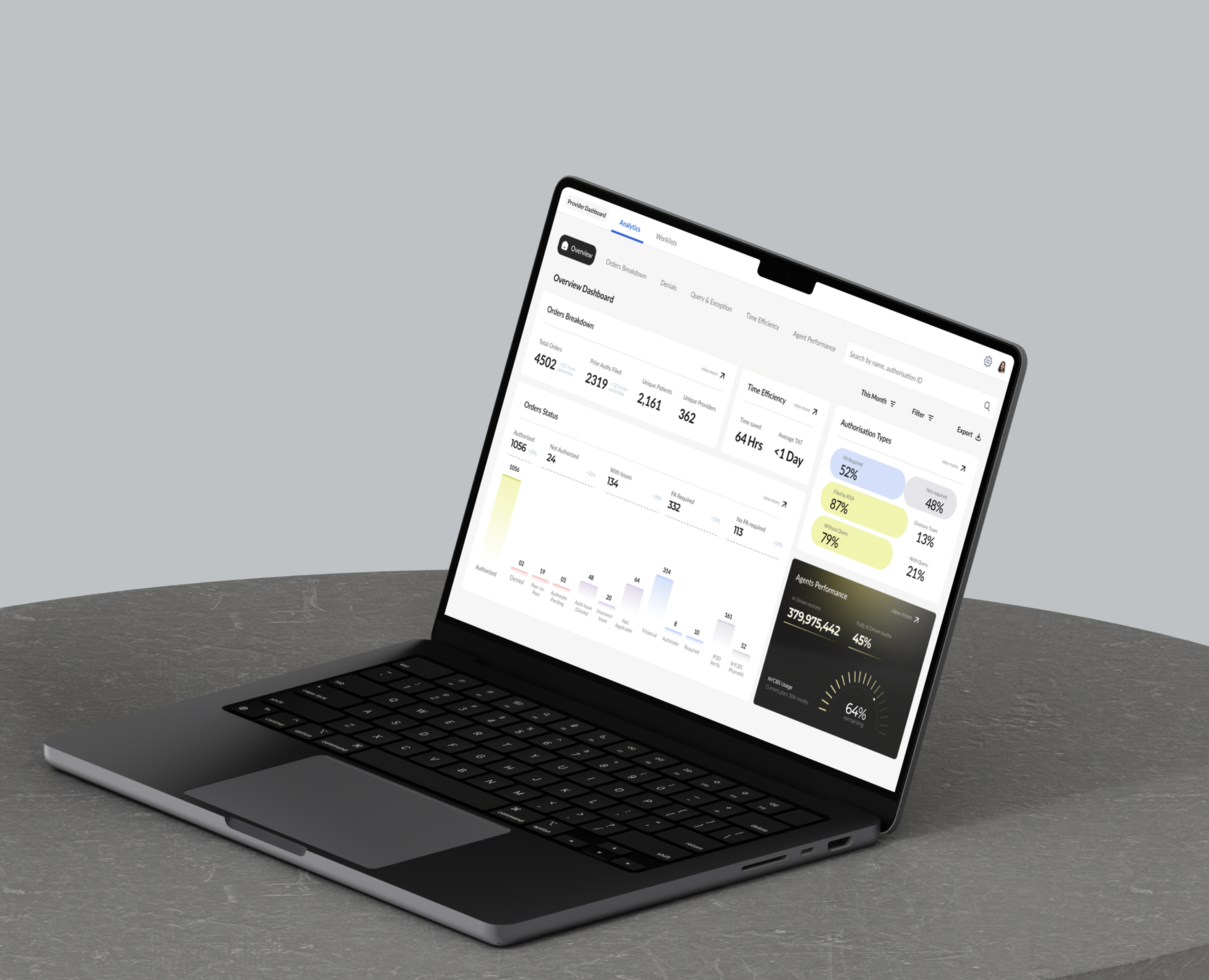
Laptop on gray surface showing a provider dashboard with analytics and order status charts.
RISA Labs Closes $11.1M Series A to Scale AI Operating System for Oncology Nationwide
END-TO-END AUTOMATION

From prior authorizations to clinical trial matching. RISA streamlines the operational processes that power modern cancer care.

Medical Benefit Prior Authorization
Pharmacy Prior Authorization
Claims
Denial Management
AI Oncologist Co-Pilot
Clinical Trial Patient Matching
Features
Data
Process
Clarity
AI POWERED
What RISA is building is not just smart technology.
It removes barriers so our teams can move faster and stay focused on what matters most: caring for patients.
Cancer Centers
We believe precision is more than accuracy—it is discipline in every action. From defining requirements to measuring outcomes, we treat detail as the foundation of reliability.
Health Systems
Transparency ensures that decisions are made on evidence, not assumption. We create systems where every action is logged and every outcome traceable.
Speciality Pharmacy
Accountability at Hardware is built on transparency and evidence. Each decision we make can be traced to data, each outcome linked to a documented process.
Life Sciences
Collaboration at Hardware is grounded in respect for expertise. We bring together engineers, designers and operators not to compete for solutions, but to align on structure and outcome.
arrow right
Case Studies
What RISA is building is not just smart technology. It removes barriers so our teams can move faster and stay focused on what matters most: caring for patients.
Dr. Jeff Vacirca MD, FACP
New York Cancer & Blood Specialists
Chief Executive Officer
1M+
Annual patient visits
80%
FTE time reclaimed
70%+
FTE time reclaimed
Full visibility into every authorization! We are extremely happy with what RISA is doing. My team now has complete insight into volumes, denials, turnaround times, and clinical alignment.
Dr. Edward Licitra, MD
Astera Cancer Care
Chief Executive Officer
1M+
Annual patient visits
80%
FTE time reclaimed
70%+
FTE time reclaimed
RISA is the safety net. In oncology, drug risk is existential. A tool like RISA acts as a safety net, automating the authorization workflow end-to-end so we shorten time to treatment, reduce errors, and take pressure off staffing.
Nirav Shah
New York Cancer & Blood Specialists
Chief Revenue Officer
1M+
Annual patient visits
80%
FTE time reclaimed
70%+
FTE time reclaimed

Insights

What we're learning from building automation for oncology revenue cycle, and what it means for your practice.
Read more
arrow up rightarrow up right
Research
June 3, 2025
Advancing Healthcare Automation: Multi-Agent System for Medical Necessity Justification
Research
February 26, 2025
Digital Twin Ecosystem for Oncology Clinical Operations

Questions

What RISA does, how it fits into your workflow, and how community oncology teams get started.
Book Consultation
arrow up rightarrow up right
01
What types of companies does RISA work with?
plus icon
Once the framework is defined, every critical aspect of the process must be measured. Hardware structures systems to capture data in real time, ensuring no event is missed or overlooked. Inputs and outputs are logged in structured records that can be compared over time. Measurement establishes the baseline and highlights deviations as soon as they appear.  Measuring is not just about collecting numbers but about making them reliable.

Without precision, data becomes noise. Hardware ensures that readings are calibrated, timestamped, and verifiable. This gives teams confidence that what they see reflects actual conditions rather than assumptions.
02
How is a RISA engagement structured?
plus icon
Once the framework is defined, every critical aspect of the process must be measured. Hardware structures systems to capture data in real time, ensuring no event is missed or overlooked. Inputs and outputs are logged in structured records that can be compared over time. Measurement establishes the baseline and highlights deviations as soon as they appear.  Measuring is not just about collecting numbers but about making them reliable.

Without precision, data becomes noise. Hardware ensures that readings are calibrated, timestamped, and verifiable. This gives teams confidence that what they see reflects actual conditions rather than assumptions.
03
Who is the Immersion plan best suited for?
plus icon
Once the framework is defined, every critical aspect of the process must be measured. Hardware structures systems to capture data in real time, ensuring no event is missed or overlooked. Inputs and outputs are logged in structured records that can be compared over time. Measurement establishes the baseline and highlights deviations as soon as they appear.  Measuring is not just about collecting numbers but about making them reliable.

Without precision, data becomes noise. Hardware ensures that readings are calibrated, timestamped, and verifiable. This gives teams confidence that what they see reflects actual conditions rather than assumptions.
04
Can RISA support multi-site or global operations?
plus icon
Once the framework is defined, every critical aspect of the process must be measured. Hardware structures systems to capture data in real time, ensuring no event is missed or overlooked. Inputs and outputs are logged in structured records that can be compared over time. Measurement establishes the baseline and highlights deviations as soon as they appear.  Measuring is not just about collecting numbers but about making them reliable.

Without precision, data becomes noise. Hardware ensures that readings are calibrated, timestamped, and verifiable. This gives teams confidence that what they see reflects actual conditions rather than assumptions.
05
How are outcomes measured and reported?
plus icon
Once the framework is defined, every critical aspect of the process must be measured. Hardware structures systems to capture data in real time, ensuring no event is missed or overlooked. Inputs and outputs are logged in structured records that can be compared over time. Measurement establishes the baseline and highlights deviations as soon as they appear.  Measuring is not just about collecting numbers but about making them reliable.

Without precision, data becomes noise. Hardware ensures that readings are calibrated, timestamped, and verifiable. This gives teams confidence that what they see reflects actual conditions rather than assumptions.


Ready to prevent denials before they start?